For Rob Rooney, the impact of Brexit on the City of London is unmistakable. “Frankfurt, Madrid, Milan and Paris are all doing better than they were. It has been at London’s expense. There is no question about that.”
During his tenure as the London head of Morgan Stanley, Rooney oversaw the relocation of hundreds of bankers and billions of pounds of assets to Frankfurt to avoid the disruption caused by Britain’s departure from the EU. More than 440 other City firms followed, shifting nearly £1 trillion between them – about 10% of the UK banking system – to other European financial hubs. “I have friends and family who moved to Barcelona, Madrid and Paris. And these cities are all booming.”
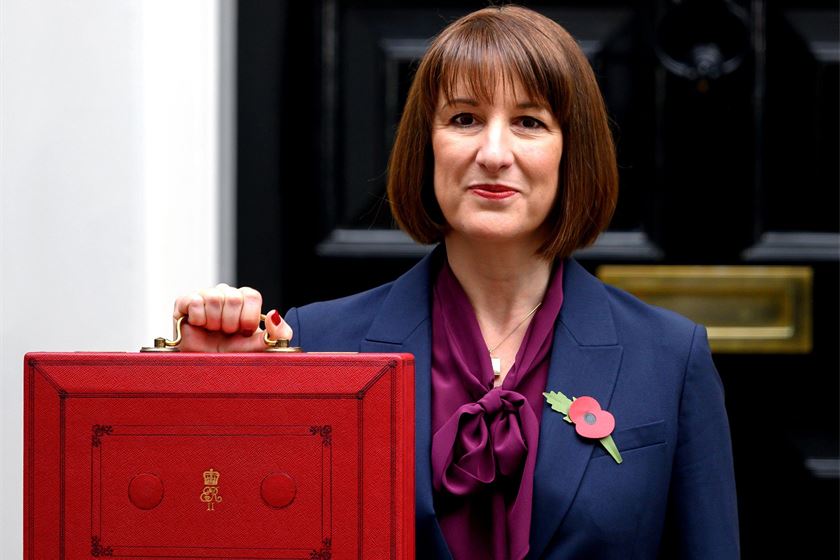
With the upcoming budget in view, Brexit economics are firmly on the political agenda. Rachel Reeves has attributed the UK’s weak recent growth and a looming downgrade in public finances to the 2016 leave vote. The Office for Budget Responsibility (OBR) is reportedly preparing dramatically weaker productivity forecasts, partly tied to Brexit, which could contribute as much as £40 billion against Reeves’s “iron-clad” fiscal rules. Reeves recently stated the watchdog would be “pretty frank” that growth post-2016 has underperformed expectations.
While productivity growth has disappointed across the Western world since the 2008 financial crisis, the UK has fared significantly worse than most of its peers on this key metric of output per hour worked – a critical driver of economic growth, wages and living standards. For years the OBR projected a rebound toward the pre-crash 2.2% annual productivity growth average. In spring the watchdog forecast roughly 1.25% annual growth by 2029-30, notably above other forecasters, including the Bank of England. Yet productivity is now virtually stagnant: since 2019 growth has been just 1.5%, underscoring the combined impact of Covid and structural weakness.
The OBR is expected to cut its long-term productivity growth forecast to about 0.9%, a modest revision on paper but one with a heavy fiscal weight — roughly £21 billion added to government borrowing by the end of the decade. Forecasting productivity is inherently difficult, complicated further by unreliable jobs-market data and a web of contributing factors that economists term the “productivity puzzle.” However, growing evidence points to Brexit as playing a significant role, deepening the post-2008 slump by affecting sectors tied to the EU and spurring companies to suspend investment. Studies estimate tougher trade barriers with the UK’s largest partner could cost the UK roughly a 4% drop in long-run productivity relative to a remain scenario.
Since the end of the EU transition period in 2020, UK exports have significantly lagged the G7 average. The car, chemical, pharmaceutical and food sectors have all under-performed, while services exports held up but the finance sector lost ground as City firms lost seamless EU access. The UK’s share of global financial exports has fallen to 15% from 21% in 2010, as rivals such as the Netherlands, Ireland, Spain and Italy gain market share. “You would have expected the UK – given the size of its finance sector – to have done at least as well, if not better, than other countries,” says John Springford of the Centre for European Reform. “But financial services output has been pretty weak since 2016. And there hasn’t been a great deal of investment in the sector either.”
City banks once powered UK productivity growth; pre-2008 Britain recorded the second-highest rate among G7 nations. In absolute terms the sector still sits above average, but the growth rate has collapsed into negative territory, dragging down the UK’s overall performance. In London, the financial hub of Britain, productivity was still well above the UK average – but the capital’s ability to lift productivity further has stalled. As William Wright of the think-tank New Financial observes: “Walk around Canary Wharf and the City and you think: ‘Wow, this looks great, who said Brexit was going to be bad?’ It is great. But arguably, it would have been even better without Brexit.”
“The money machine, if you will, the biggest single contributor to tax receipts – one of the single most important contributors to the UK economy – is misfiring.” For Rooney the relocation of Morgan Stanley’s EU-client facing business was extensive, spanning Frankfurt, Dublin, Amsterdam, Madrid, Milan and Paris. “This is true of all banks. You saw the Milan office, the Madrid office, Frankfurt office, the Paris office, the Nordic offices all grow.” Barclays alone moved more than £100 billion of assets to Dublin, instantly making it Ireland’s third-largest bank. Bank of America, HSBC and Citi shifted operations to Paris; Goldman Sachs and JP Morgan moved staff to Frankfurt. That fragmentation has under-cut efficiency, with firms duplicating functions and navigating added post-Brexit regulation and multiple regulators.
For Reeves, reviving the UK’s weak productivity performance is appealing not just for growth but also for boosting tax revenue. In the mid-2000s, strong productivity growth helped real wages rise by about 33% per decade; since 2008 real wage growth has stagnated. Facing the OBR’s downgrade, the chancellor is expected to argue that Labour’s policies can turn this around, emphasising reforms in planning, business red tape reduction and trade deals. Yet by explicitly blaming Brexit, Labour risks tension with its refusal to consider re-joining the EU single market or customs union. “The problem is given the UK’s red lines this [blaming Brexit] can’t go much further,” says Professor Anand Menon of the UK in a Changing Europe. “The danger is, by talking about an issue, that you’re increasing its salience without having any sort of plan of how to deal with it.” Still, Reeves remains defiant: she told the Guardian in October that Labour’s readiness to build closer EU ties would boost productivity growth. “I think that we can defy the past and that we can do better.” Rebooting the City is central to her strategy. Outside the EU, some experts say the approach may be easier to execute. Financial services now play a key role in government’s industrial strategy: Reeves is cutting City red tape and has launched her “Leeds reforms” aimed at boosting competitiveness. The politics are tricky: Labour’s past links to the 2008 crash and its aversion to cosying up with bankers pose an internal dilemma, especially as Reeves is under pressure to tax banks to plug the fiscal hole. Many economists warn the City’s pre-crisis productivity surge was built on unsustainable profits and risk-taking. Others argue Britain suffers from a “finance curse” – where a dominant global industry crowds out other sectors and deepens inequality. For Rooney, however, London’s future as a financial hub remains vital. Since leaving Morgan Stanley three years ago he has become CEO of Hyperlayer, a UK-based fintech firm working with major banks to deliver personalized consumer accounts, rewards and payments products. In October it raised £30 million in a funding round and was valued at about £150 million – a sign the UK can still attract a new breed of finance startups. “You’ve got some terrific innovation here in the UK,” Rooney says. “But I think the question is, could there be more? Could it be faster? And I think that’s really what the chancellor has got to be trying to figure out.” For the UK economy, fixing the “money machine” will mean dealing with Brexit’s lasting legacy, raising productivity and ensuring London remains the continent’s financial engine.